What the effect is for
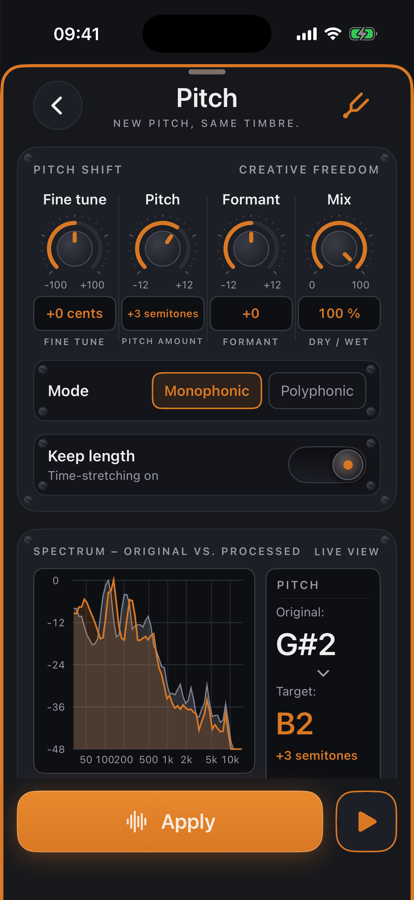
Pitch shifts the pitch without changing the duration: a phase vocoder with peak locking keeps the partials together, and the timbre — the formants — is separated via cepstrum and set independently. At “Formant 0” a voice stays the same person, only higher or lower; the formant knob can make it deliberately brighter or darker.
With “Keep length” switched off you get the tape effect: the recording runs faster or slower, pitch, duration and timbre change together. The analysis detects the fundamental (YIN) and shows original and target as notes, plus the spectra before and after processing.
Benefits
- ✓Formant preservation: transposed speech sounds natural, not like a cartoon.
- ✓Monophonic for speech and single instruments, polyphonic for chords and mixes.
- ✓Fine tuning in cents — a slightly detuned recording is moved exactly.
- ✓Preview with all knobs live; analysis with fundamental, pitch range and spectrum.
Included for free